
Key Takeaways
- Carpet beetle vs bed bug confusion is common, but they are very different pests.
- Bed bugs feed on blood and bite, while carpet beetles damage fabrics and materials.
- Bed bugs hide near beds; carpet beetles stay in carpets, closets, and fabrics.
- Skin irritation from carpet beetles is not a bite, but an allergic reaction.
- Correct identification helps you choose the right treatment and avoid worsening the problem.
Carpet beetles and bed bugs are two small pests that often get mistaken for each other. At first glance, they can look similar, but they behave very differently and cause different problems inside your home. Understanding the carpet beetle vs bed bug difference helps you take the right action quickly and avoid unnecessary stress.
Bed Bug Overview
Bed bugs are tiny insects that survive by feeding on blood, usually while you sleep. If you wake up with unexplained bites, bed bugs are often the first suspect. Here’s some quick bite of information on them:
- Size: About 4 to 7 mm long, similar to an apple seed
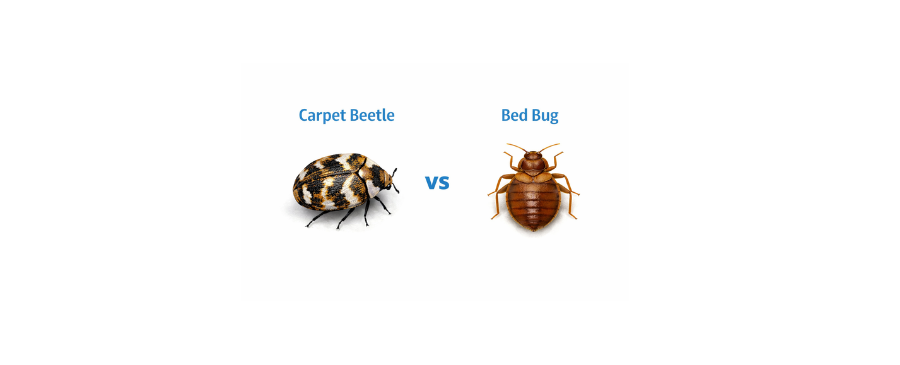
- Look: Flat, oval body with a reddish-brown color and no wings
- Habitat: Found near beds, mattresses, headboards, and furniture cracks
- Food: Feed only on human or animal blood
- Types of Bites: Leave itchy red welts, often in lines or clusters
- Behavior: Active at night and hides during the day
Carpet Beetle Overview
Carpet beetles are small insects that damage fabrics and natural materials, not people. So if you see damage to clothes or carpets instead of bites, carpet beetles are more likely your culprits. Here’s how you know it’s them:
- Size: Usually 2 to 4 mm long, smaller than bed bugs
- Look: Oval-shaped with patterned shells in black, brown, white, or yellow
- Habitat: Found in carpets, closets, upholstery, and stored clothing
- Food: Feed on wool, silk, leather, fur, and pet hair
- Types of Bite: Do not bite, but larvae can irritate the skin
- Behavior: Adults are attracted to light and often appear near windows
How to Tell the Difference Between Carpet Beetles and Bed Bugs
Once you know what to look for, the difference between these pests becomes clear. Let’s take a closer look at some of the easiest ways to solve the bed bug vs carpet beetle confusion.
Physical Appearance
- Carpet beetles are small, rounded insects with patterned shells and may have wings.
- Bed bugs are flat, oval, reddish-brown insects with no wings and a more uniform look.
Behavior
- Carpet beetles feed on fabrics and household materials
- Bed bugs feed on blood and stay close to sleeping areas
- Carpet beetles are often seen near windows
- Bed bugs hide in beds, furniture, and cracks
Carpet Beetle Larvae vs Bed Bug Nymphs
The early life stages of carpet beetle and bed bug look very different and can help you identify the pest faster. Check out this table:
Early Stage of Bed Bug vs Carpet Beetle Comparison Table
| Feature | Carpet Beetle Larvae | Bed Bug Nymphs |
| Look | Hairy, worm-like body | Small, flat version of adult bed bugs |
| Color | Brown or tan | Translucent to light brown |
| Food | Natural fibers | Blood |
| Speed of Movement | Slow crawling | Faster movement |
Quick Hint: If you see something hairy, it is not a bed bug.
Where Do Bed Bugs and Carpet Beetles Hide?
Both these pests prefer to stay hidden, but they choose very different spots depending on what they need to survive.
Where Bed Bugs Hide
Bed bugs stay close to sleeping areas so they can feed on you at night without being noticed.
- Mattress Seams: They hide along stitching and folds where they are protected and close to their food source.
- Bed Frames: Cracks and joints in the frame provide tight spaces where they can stay undisturbed.
- Headboards: These areas are rarely cleaned, making them a safe hiding place.
- Furniture Cracks: Small gaps in nearby furniture give them easy shelter during the day.
- Behind Wall Hangings: Picture frames or wall décor near the bed can also hide small infestations.
Where Carpet Beetles Hide
Carpet beetles look for places where they can find fabric and natural materials to feed on.
- Carpets and Rugs: Larvae often stay deep within fibers where they can feed and grow.
- Closets: Dark, undisturbed spaces with stored clothes are ideal for them.
- Upholstered Furniture: Sofas and chairs provide both shelter and food sources.
- Stored Clothing: Items made of wool, silk, or other natural fibers are especially at risk.
- Pet Bedding: Pet hair and natural debris make this a common hiding and feeding spot.
How Bed Bugs and Carpet Beetles Get Into Homes
Wether its bed bugs or carpet beetle, both insects don’t just appear out of nowhere. They usually enter your home in very specific ways, often without you noticing at first.
Where Do Bed Bugs Come From?
Bed bugs are excellent hitchhikers and can travel from place to place on everyday items.
- Travel Luggage: They can cling to bags and come home with you after trips.
- Used Furniture: Second-hand beds, sofas, or mattresses may already carry them.
- Clothing: They can attach to clothes, especially after visiting infested areas.
- Hotel Stays or Shared Living Spaces: Apartments, dorms, and hotels are common sources.
Once inside, bed bugs spread quickly from one room to another, especially through cracks and shared walls.
What Causes Carpet Beetles?
Carpet beetles usually enter homes in search of food and places to lay eggs.
- Open Windows and Doors: Adult beetles can fly in from outside.
- Flowers or Plants Brought Indoors: They may come in through fresh plants or bouquets.
- Infested Fabrics or Clothing: Items already carrying eggs or larvae can introduce them.
- Accumulated Lint, Pet Hair, or Natural Fibers: These provide the perfect food source for larvae to grow.
Once they find food, carpet beetles tend to stay and multiply in hidden areas like closets and carpets.
Do Carpet Beetles Bite Like Bed Bugs?
This is where most confusion happens. One of the most critical points to remember when discussing carpet beetle vs bed bugs is that carpet beetles do not bite humans. Bed bugs do.
Why Carpet Beetles Can Cause Skin Reactions
Despite not feeding on your blood, carpet beetles can cause an allergic reaction. Why? Because their larvae have tiny hairs that can trigger an allergy. This reaction may look like a rash or small bumps.
So next time you want to compare carpet beetle vs bed bug bites, remember this: only bed bugs actually bite, and what may look like a carpet beetle bite is merely an allergic reaction.
Bed Bug Bites: What to Look For
Bed bug bites usually appear in a clear pattern. Look for small red bumps, often in lines or clusters. These bumps can be itchy and irritating and are often found on exposed skin like arms, neck, and legs. They often show up after sleeping, which is a strong clue.
Main Difference Between Carpet Beetles & Bed Bugs
The simplest way to understand carpet beetle vs bed bug differences is this:
- Bed bugs affect your sleep and comfort, whereas carpet beetles affect your belongings, particularly clothes and fabrics.
- Bed bugs feed on blood, so they bite you to get their food, while carpet beetles feed on fabrics and damage materials.
Signs of Carpet Beetle Infestations vs. Bed Bug Infestations
The easiest way to tell these pests apart is by the signs they leave behind in your home.
Signs of Bed Bugs
Bed bugs leave clear evidence around sleeping areas, especially where they hide and feed.
- Blood Spots on Bedding: Small reddish stains may appear after feeding.
- Dark Fecal Stains on Mattresses: Tiny black or brown spots are a common sign of activity.
- Shed Skins: As they grow, bed bugs shed their outer skin, which can collect near hiding spots.
- Live Bugs Hiding in Mattress Seams or Furniture: You may find them tucked into tight spaces close to where you sleep.
Signs of Carpet Beetles
Carpet beetles leave different clues, mostly related to fabric damage and hidden larvae. Here are some of the common signs of carpet beetles.
- Holes in Clothing or Fabrics: Irregular damage appears on wool, silk, or other natural materials.
- Shed Larval Skins: These dry, shell-like skins are often found in carpets or closets.
- Larvae in Carpets or Closets: Small, hairy larvae may be seen crawling slowly in hidden areas.
- Adult Beetles Near Windows: Adults are attracted to light and are often spotted near windowsills.
Why It’s Important to Identify Which Pest You Have
Knowing exactly which pest you are dealing with helps you choose the right treatment and avoid making the problem worse.
Health Risks of Bed Bugs
Bed bugs mainly affect your comfort and well-being in the following ways, especially when the infestation grows:
- Itchy Bites: Their bites can cause red, itchy welts on exposed skin.
- Allergic Reactions: Some people may develop stronger reactions to the bites.
- Sleep Disruption: Nighttime biting can make it hard to rest properly.
- Stress and Anxiety From Infestations: The presence of bed bugs can lead to ongoing discomfort and worry.
Damage and Risks From Carpet Beetles
Carpet beetles don’t bite, but they can still cause noticeable damage inside your home.
- Damage to Carpets and Rugs: Larvae feed on natural fibers, leading to worn or damaged areas.
- Holes in Clothing and Fabrics: Items made of wool, silk, or similar materials are often affected.
- Contamination of Stored Items: Infested fabrics or storage areas may need cleaning or disposal.
- Allergic Skin Irritation: Contact with larval hairs can cause mild skin reactions in some people.
How to Prevent Bed Bug and Carpet Beetle Infestations
A few simple habits can go a long way in keeping both bed bugs and carpet beetles out of your home.
Bed Bug Prevention
Staying alert and maintaining clean sleeping areas can reduce the risk of bringing bed bugs indoors. Check out the following:
- Inspect Luggage After Travel: Check bags, clothes, and shoes before bringing them inside your home.
- Check Used Furniture Before Bringing it Home: Look closely at seams, joints, and hidden areas for any signs of bugs.
- Regularly Inspect Mattresses and Bedding: Keep an eye out for stains, shed skins, or live insects.
- Reduce Clutter Around Sleeping Areas: Fewer hiding spots make it easier to spot and prevent infestations.
Carpet Beetle Prevention
Routine cleaning and proper storage can help stop carpet beetles from settling in. Try the following:
- Vacuum Carpets and Furniture Regularly: This removes larvae, eggs, and food sources.
- Store Clothing in Sealed Containers: Protect fabrics, especially those made from natural fibers.
- Clean Closets and Storage Areas: Regular cleaning prevents buildup where beetles can thrive.
- Remove Lint, Hair, and Natural Debris: Keeping these areas clean cuts off their food supply.
When to Call a Pest Control Professional
If you keep seeing signs of any pest or the problem spreads, it is time to get help. A professional can confirm whether it is bed bugs or carpet beetles and treat the issue at the source.
Looking for reliable pest control solutions? Take Care Termite and Pest Control serves the Tri-Valley, Central Valley, and nearby areas. Call (209) 832-7300 today