

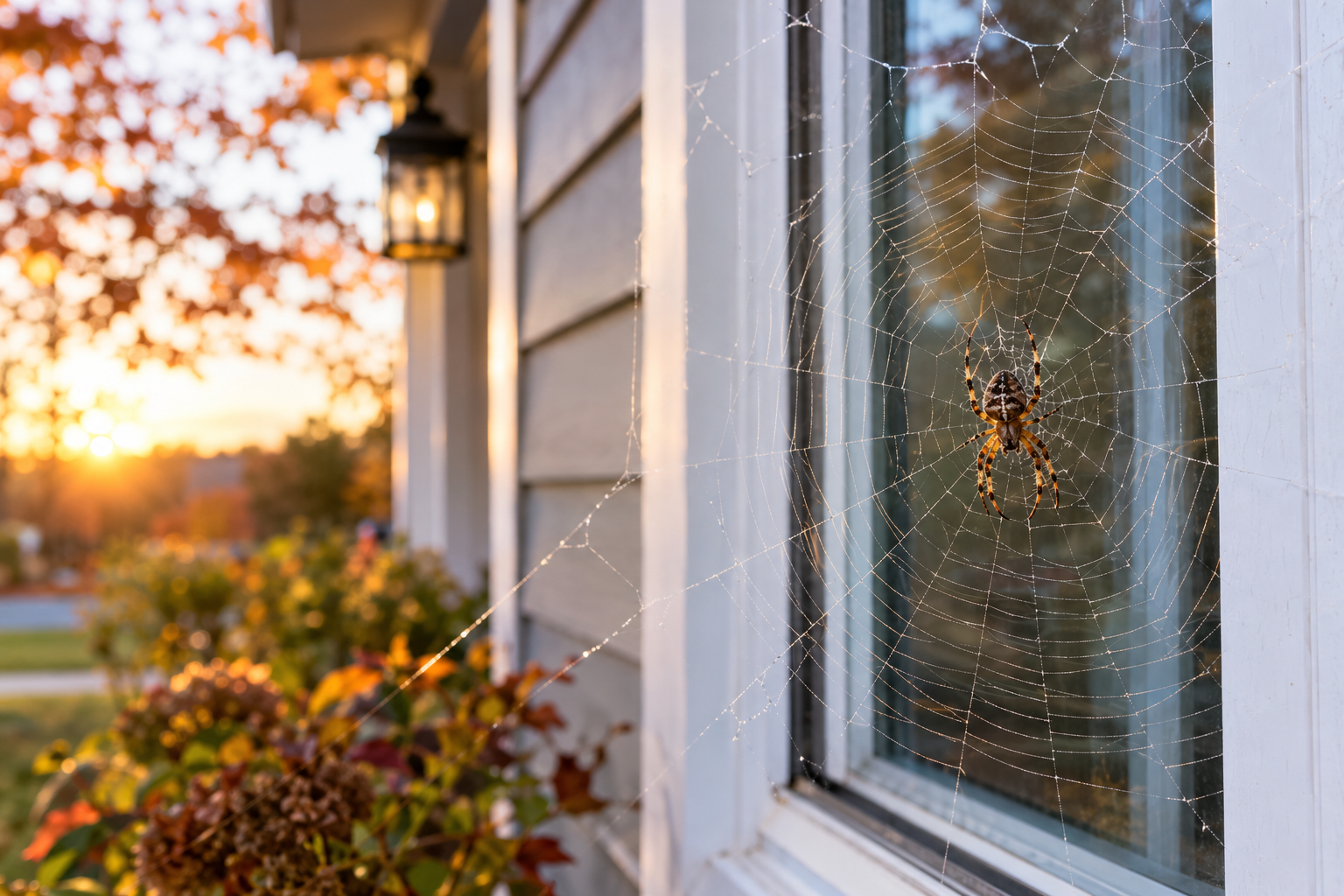
Why are there more spiders at home in November? Have you noticed more spider webs around your windows, a spider crawling across your living room, or an unexpected eight-legged visitor in your garage?
You’re not alone! November is a great time to notice spider activity around your home. As fall arrives, certain spider species become more noticeable, and some may wander indoors.
The good news? Seeing a spider doesn’t automatically mean your home has an infestation. Many spiders are harmless and actually help control other insects. However, finding webs in every corner or repeatedly spotting spiders inside can become frustrating.
So, why do spiders seem to appear everywhere during fall? Where do they hide, and what can you do to keep them away?
Let’s look at why spider activity may increase in November here in California and explore seven simple ways to make your home less inviting to these unwanted guests.
Why Do You See More Spiders in November?
Fall is a time when many spiders become more noticeable. Some outdoor spiders reach adulthood, build larger webs, or become easier to spot in gardens and around buildings. Certain species also wander in search of mates.
Cooler weather can influence spider activity, but not every spider enters your home to escape the cold. Some species already live indoors, while others accidentally find their way inside through small openings.
Spiders are also attracted to places where they can find food. Since many spiders feed on insects, areas with plenty of flies, moths, and other small bugs may provide an attractive hunting ground.
According to the University of California’s Integrated Pest Management Program, most spiders are beneficial predators, and the majority are not dangerous to people.
What does this mean for homeowners? More spider sightings in November may reflect seasonal activity, available food, or easy access to sheltered spaces. Instead of worrying about every spider you see, focus on reducing entry points, limiting hiding places, and identifying any recurring pest problems.
7 Simple Ways to Keep Spiders at Home Away This November
1. Seal Cracks and Gaps Around Your Home
Think about how many small openings your home has. There are gaps around windows, spaces beneath doors, openings where pipes enter walls, and cracks around the foundation.
These areas can give spiders an easy way inside.
You don’t need a large hole for a small spider to enter. Even a narrow gap may be enough for some species to squeeze through.
What you can do:
- Inspect door frames and window edges for gaps.
- Repair damaged window and door screens.
- Install or replace worn door sweeps.
- Seal suitable cracks around the foundation and exterior walls.
- Check openings around utility lines and plumbing.
- Pay special attention to garages, laundry rooms, and doors that lead directly outdoors.
- Sealing these entry points can also help reduce other unwanted pests, including ants and some crawling insects.
2. Remove Spider Webs Regularly
Spider webs can quickly make an otherwise tidy home look neglected. You might find them in ceiling corners, around porch lights, beneath outdoor furniture, or along garage walls.
Removing webs helps keep these areas clean and makes it easier to notice whether spiders are returning.
Try this simple routine:
Use a vacuum cleaner or suitable cleaning tool to remove webs from indoor corners, ceilings, and storage areas. Outside, carefully remove accessible webs around doorways, windows, and eaves using an appropriate tool.
Check the same spots regularly. If webs keep appearing in one area, look for nearby insects, sheltered spaces, or an opening that spiders may be using.
Remember that a single web doesn’t necessarily indicate a serious problem. The goal is to keep spider activity manageable and identify repeated patterns.
3. Keep Your Garage, Closet, and Storage Areas Tidy
When was the last time you checked the boxes in your garage or the items tucked away in a closet?
Spiders often use quiet, undisturbed spaces as hiding places. Stacks of cardboard, unused clothing, old newspapers, and piles of stored belongings can provide shelter.
These areas may also attract insects, giving spiders another reason to stay nearby.
Make these spaces less inviting by:
- Keeping floors and corners free of clutter.
- Storing belongings in sealed plastic containers when practical.
- Avoiding piles of cardboard and old paper.
- Vacuuming behind storage units and along wall edges.
- Keeping clothing and shoes off the floor.
- Before reaching into a dark storage box or putting on shoes that have been sitting unused, check them first.
- A little organization can make your home easier to clean and help you spot pest activity before it becomes a bigger concern.
4. Reduce the Insects That Spiders At Home Feed On
Here’s something many homeowners overlook: sometimes, the reason spiders keep showing up is that other insects are already present.
Spiders are predators. Many species feed on flies, moths, mosquitoes, and other small arthropods. If insects are plentiful around your property, spiders may have an easy source of food.
Instead of focusing only on the spiders, pay attention to the insects around your home, too.
Here are a few practical steps:
- Keep food sealed and clean up crumbs promptly.
- Empty household trash regularly and use covered bins.
- Repair damaged screens that allow flying insects indoors.
- Fix moisture problems that may attract certain pests.
- Keep outdoor lights and nearby areas under observation if they attract flying insects.
- Outdoor lights can draw insects toward doors and windows, which may create good hunting spots for web-building spiders.
- You don’t necessarily need to turn off every light. Consider using appropriately placed, less insect-attractive lighting where practical.
- If you notice several kinds of pests in the same area, it may be worth investigating the underlying cause rather than treating each sighting separately.
5. Maintain Your Yard and the Area Around Your Foundation
Your home’s exterior can provide plenty of hiding places for spiders.
Tall grass, dense vegetation, piles of leaves, stacked wood, and unused outdoor items can create sheltered spaces where spiders and other pests may gather.
Keeping the area around your home maintained can help reduce these hiding places and make routine inspections easier.
A few helpful outdoor habits include:
Trim shrubs and plants that touch exterior walls.
Keep grass maintained around the property.
Remove accumulated leaves and unnecessary yard debris.
Store firewood away from the house when practical.
Reduce clutter around patios, sheds, and outdoor storage areas.
Don’t forget to check the corners of patios, garden furniture, and outdoor storage structures.
You don’t need to eliminate every spider from your yard. Spiders play a useful role in the environment by feeding on other insects. The goal is to discourage unwanted activity close to your home’s entrances and living spaces.
6. Learn to Recognize Common Spiders at Home
Not every spider is the same, and knowing what you’re looking at can help you decide what to do next.
Some spiders build webs and stay in one place, while others actively hunt and may move across floors or walls.
Here are a few types you may encounter in and around homes in California.
- Common house spiders: These small, often brownish spiders may build messy webs in quiet corners, closets, garages, and other sheltered locations. They are generally not considered dangerous to people.
- Cellar spiders: Often recognized by their very long, thin legs, these spiders may hang upside down in webs in quiet indoor spaces, including garages and other sheltered areas.
- Wolf spiders: These spiders actively hunt rather than relying on webs to catch prey. They may be found on the ground or occasionally wandering indoors. Their size and speed can look alarming, but they generally avoid people.
- Black widow spiders: These spiders deserve extra caution. Adult females are typically shiny black and have a red marking resembling an hourglass on the underside of the abdomen. They often hide in sheltered, undisturbed outdoor locations, such as woodpiles and cluttered areas.
Avoid handling unfamiliar spiders, especially those you suspect may be black widows.
Also, don’t assume you can identify a spider accurately from its color or size alone. If you’re unsure what you’ve found, take a photo from a safe distance and seek advice from a qualified pest professional.
7. Know When to Call a Pest Control Professional When There Are More Spiders at Home
Occasionally spotting a spider is normal. Finding them repeatedly in the same rooms, discovering webs in multiple areas, or regularly encountering spiders near storage spaces may mean it’s worth investigating further.
A professional pest control service can help assess the situation, identify contributing conditions, and recommend an appropriate control plan.

When to Consider Seeking Professional Help For More Spiders at Home?
- You regularly find spiders in several parts of your home.
- Webs keep returning shortly after cleaning.
- You discover egg sacs or repeated spider activity in storage areas.
- You suspect a potentially medically significant spider.
- You cannot identify how spiders are entering the property.
DIY measures have not reduced the problem.
Effective spider management often involves more than simply treating the spider you can see. Depending on the situation, a pest professional may recommend web removal, attention to entry points, habitat changes, or targeted treatment.
At Take Care Termite & Pest Control, homeowners can explore residential pest control options that include spider treatment and web removal.
The right approach depends on the pest, the affected areas, and the conditions around your property.
Are Spiders at Home Dangerous to Your Family?
It’s understandable to feel uncomfortable when a spider appears near your bed, inside a child’s room, or in a frequently used part of the house.
However, most spiders are not considered dangerous to people, and bites are uncommon. Spiders generally prefer to avoid humans and may bite when trapped or threatened.
That said, it’s wise to be cautious around unfamiliar spiders.
In California, black widows are the main spiders of medical concern. They are often found in sheltered outdoor locations rather than openly wandering through living spaces.
If you suspect a black widow is present, avoid touching it or attempting to handle it yourself.
If someone is bitten and develops severe pain, muscle cramps, sweating, or other concerning symptoms, seek prompt medical advice. Call emergency services for severe or rapidly worsening symptoms.
The bottom line: Don’t panic when you see a spider, but don’t handle an unfamiliar one, either. Focus on safe prevention and seek professional assistance when needed.
Does a Clean House Prevent Spiders in November?
Keeping your home clean can help, but it isn’t a guarantee that spiders will stay away.
Spiders can enter clean homes through gaps, open doors, damaged screens, and items brought indoors. Some also live in outdoor areas near homes and may wander inside accidentally.
Cleaning helps by reducing clutter, removing webs, and making hiding places easier to inspect. Controlling other insects can also make certain areas less attractive to spiders.
For the best results, combine regular cleaning with sealing entry points, maintaining your yard, and monitoring recurring activity.
If spiders continue appearing despite these steps, consider having the property assessed by a pest control professional.
Your Spider in November Prevention Checklist
Want to get ahead of spider problems this fall? Start with these simple tasks.
Check window screens and door seals.
Seal suitable cracks and gaps around the home’s exterior.
Remove webs from accessible indoor and outdoor areas.
Organize garages, closets, and storage spaces.
Keep food waste and household trash under control.
Reduce unnecessary yard debris near the house.
Check for other insect activity around doors and windows.
Monitor areas where spiders repeatedly appear.
You don’t have to complete everything in one day. Start with the areas where you’ve noticed the most spider activity, then build a simple weekly or monthly routine.
Frequently Asked Questions About Spiders in November
Why am I seeing more spiders in my house in November?
Some spiders become more noticeable in fall because they reach adulthood, search for mates, or wander into buildings. Others may already live indoors. Seasonal activity, available insects, and entry points can all affect how often you see them.
How do I get rid of spiders in my house naturally?
Start by removing webs, vacuuming regularly, reducing clutter, sealing cracks, and repairing screens. Also address other insect activity that may provide spiders with food. These measures can help reduce spider activity, although they may not eliminate every spider.
Do spiders come inside because of cold weather?
Some spiders may wander indoors during seasonal changes, but not all enter homes to escape the cold. Certain house spiders are adapted to living indoors, while many outdoor species remain outside or enter buildings by accident.
Should I be worried if I find a spider egg sac?
An egg sac indicates that a spider has laid eggs, but it does not automatically mean you have a major infestation. Avoid handling unfamiliar egg sacs directly. If you find several sacs or repeated spider activity, consider contacting a pest control professional for advice.
When should I call a spider exterminator?
Consider professional spider control if you repeatedly find spiders in multiple areas, webs keep returning, you discover recurring egg sacs, or you suspect a potentially dangerous species. A professional can help identify the problem and recommend suitable treatment and prevention measures.
Final Thoughts: Make Your Home Less Inviting to Spiders in November
November doesn’t have to mean more unwanted surprises in your home.
By sealing entry points, removing webs, organizing storage areas, managing other insects, and maintaining your yard, you can make your property less attractive to many common spiders.
Remember, seeing one spider doesn’t automatically mean you have an infestation. What matters is whether the activity continues, spreads to other areas, or involves a spider that may pose a risk.
If spiders keep showing up despite your best efforts, you don’t have to figure everything out on your own.
Take Care Termite & Pest Control can help you explore practical spider control options for your home.
Don’t let recurring webs and unwanted visitors become a constant frustration. Visit our residential pest control services page to learn more about spider treatment and web removal.
Ready to take the next step? Contact Take Care Termite & Pest Control to discuss your spider concerns and find a suitable solution for your property.
