
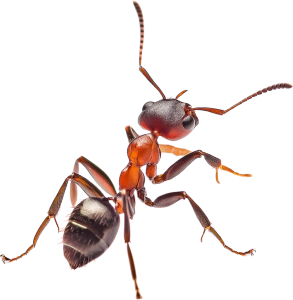

Termites do not wait for you to notice them.
In fact, one of the biggest problems with termite infestations is that they can remain hidden for months or even years. By the time you notice visible damage, the termites may have already affected important parts of your home or property.
That is why a professional termite inspection can be an important step in protecting your investment.
California properties can face different types of termites, including subterranean and drywood termites. These pests behave differently and can hide in places that are difficult for homeowners to access. According to UC Integrated Pest Management, professional inspections can help identify infestations that remain hidden behind walls, beneath floors, in crawl spaces, or inside structural wood.
Fall is also an excellent time to take a closer look at your property. Depending on the termite species and local conditions, termite activity and swarming can occur during spring and fall. An inspection can help you identify problems before they develop into larger repair issues.
So, how do you know when it is time to call a professional?
Here are seven warning signs you should not ignore.
1. You Find Mud Tubes Around Your Foundation
One of the most recognizable signs of subterranean termites is the appearance of mud tubes.
These narrow, tube-like structures may appear along foundations, walls, crawl spaces, concrete surfaces, or other areas where termites travel between the soil and a wooden structure.
Subterranean termites use these shelter tubes to protect themselves from exposure while they move between their colony and food source.
UC IPM identifies shelter tubes as one of the most common visible signs of subterranean termite activity.
You may notice them:
- Along foundation walls
- Under decks or porches
- Around crawl-space areas
- Near wooden structures
- Along cracks in concrete
- Around plumbing or utility penetrations
Do not assume that an old-looking tube means the problem has disappeared.
A professional inspector can investigate the surrounding area and determine whether the property shows evidence of current or previous termite activity.
What to do: If you discover mud tubes, avoid simply removing them and forgetting about them. Schedule a professional termite inspection so the area and surrounding structure can be properly evaluated.
2. You See Small Piles of Termite Droppings
Have you noticed small piles of what looks like sawdust near wooden surfaces?
Do not automatically assume it is ordinary debris.
Drywood termites can produce distinctive fecal pellets as they feed inside wood. These pellets may fall through small openings in infested wood and accumulate on floors, window sills, furniture, or other surfaces.
UC IPM notes that drywood termite pellets can be an important clue during an inspection. Inspectors may also look for small “kickout holes,” which termites use to push pellets out of their galleries.
The challenge is that homeowners may mistake these pellets for sawdust or other household debris.
And cleaning them up does not solve the underlying problem.
If you repeatedly find unexplained pellets in the same location, it is worth having the area professionally inspected.
What to do: Take note of where you found the material and avoid disturbing the surrounding wood until a professional can examine it.
3. You Notice Discarded Wings or Swarming Insects
Finding piles of small wings around windows, doors, light fixtures, or other areas of your home can be another warning sign.
Termite swarmers, also known as winged reproductives, leave established colonies to reproduce and establish new colonies. After the swarm, they shed their wings.
Unfortunately, termite swarmers can look similar to flying ants.
That makes identification difficult for the average homeowner.
UC IPM recommends professional evaluation when termites are suspected because identifying the insect correctly is an important part of determining the appropriate management strategy.
You may notice swarmers:
- Around windows
- Near doors
- Around outdoor lights
- Inside bathrooms or kitchens
- Near patios or porches
- Around wood piles or other wooden structures
Seeing winged insects does not automatically prove that your house has an active infestation. However, it is a good reason to investigate further.
What to do: If you see swarming insects or piles of discarded wings, schedule a termite inspection rather than assuming they are harmless ants.
4. Your Wood Sounds Hollow or Feels Unusually Weak
Termites feed on cellulose found in wood. Over time, their feeding can create galleries and weaken wooden components.
One possible warning sign is wood that sounds hollow when gently tapped.
You may also notice:
- Buckling floorboards
- Damaged trim
- Bubbling or blistering paint
- Cracked or damaged wood
- Doors or windows that suddenly become difficult to operate
- Wood that appears thin or weakened
These signs do not always mean termites are responsible. Moisture damage, rot, fungi, and other wood-destroying organisms can create similar symptoms.
That is another reason a professional inspection matters.
A trained inspector can look beyond the visible symptom and determine whether the underlying issue involves termites, moisture, dry rot, or another structural concern.
What to do: If a wooden area suddenly looks or feels different, do not wait for the damage to become more obvious. Have it inspected.
5. You Notice Changes Around Your Foundation, Crawl Space, or Attic
Some of the most important areas of a home are also the easiest to overlook.
Homeowners may rarely inspect crawl spaces, attics, foundation edges, or other difficult-to-access areas. Unfortunately, termites can take advantage of these hidden spaces.
During a professional termite inspection, inspectors can examine accessible areas for signs such as:
- Mud tubes
- Wood damage
- Termite pellets
- Moisture problems
- Plumbing leaks
- Wood-to-soil contact
- Conditions that encourage termite activity
- Other wood-destroying organisms
Take Care Termite & Pest Control’s inspection process includes evaluating accessible interior and exterior areas, including areas around foundations, sinks, attics, crawl spaces, and other potential risk zones.
This broader inspection matters because termites do not necessarily announce themselves in the living room.
They can remain hidden where you rarely look.
What to do: If you have not had your crawl space, attic, foundation, or other vulnerable areas professionally evaluated recently, consider scheduling an inspection before fall.
6. Your Property Has Moisture or Wood-to-Soil Contact
Not every termite warning sign involves actually seeing termites.
Sometimes, the warning sign is a condition that makes your property more vulnerable.
Moisture can create favorable conditions for certain wood-destroying pests. UC IPM recommends addressing issues such as plumbing leaks, poor drainage, foundation cracks, and excessive moisture around structures.
Wood that directly contacts soil can also create an easier pathway for subterranean termites.
Look around your property for:
- Leaking pipes or fixtures
- Poor drainage
- Standing water
- Damp crawl spaces
- Wood touching soil
- Untreated fence posts
- Wood piles close to the structure
- Excessive vegetation against the building
These conditions do not guarantee a termite infestation.
However, they can increase the risk.
For homeowners and property managers, identifying these conditions early can help reduce opportunities for termites and other pests to establish themselves.
What to do: Correct moisture and structural conditions where possible, then consider a professional inspection to determine whether termite activity has already started.
7. You Are Buying, Selling, or Managing a Property
Sometimes, you do not need to see a warning sign before scheduling a termite inspection.
The property itself may be the reason.
If you are buying a home, a termite inspection can provide valuable information about potential structural pest issues before you commit to the property.
If you are selling, identifying termite damage early can give you time to address problems before they complicate the transaction.
For property managers, regular inspections can help identify issues before they become larger maintenance problems for tenants, owners, and investors.
Take Care Termite & Pest Control provides termite inspections and reports for homeowners, real estate professionals, and property owners throughout the Central Valley and Tri-Valley areas.
A professional inspection can help you understand:
- Whether there is evidence of termite activity
- What type of pest may be involved
- Where damage or activity was found
- Whether conducive conditions exist
- What treatment or repair options may be appropriate
That information gives you a clearer basis for making a decision.
Why a Professional Termite Inspection Is Worth It
You might be wondering:
“If I don’t see termites, why should I pay for an inspection?”
The answer is simple.
Termites are experts at staying out of sight.
Subterranean termites can remain underground or travel through shelter tubes. Drywood termites can live deep inside wooden structures. This makes it difficult for homeowners to determine the full extent of an infestation through a quick visual check.
UC IPM specifically notes that drywood termites are difficult to detect because they live deep inside wood and are rarely seen except during swarming or when infested wood is disturbed.
A professional inspection provides a much more thorough assessment.
At Take Care Termite & Pest Control, trained inspectors evaluate accessible areas inside and outside the structure, look for termite activity and damage, and identify conditions that may contribute to future infestations.
The inspection can also help distinguish termite damage from other problems, such as moisture damage, dry rot, fungus, or other wood-destroying organisms.
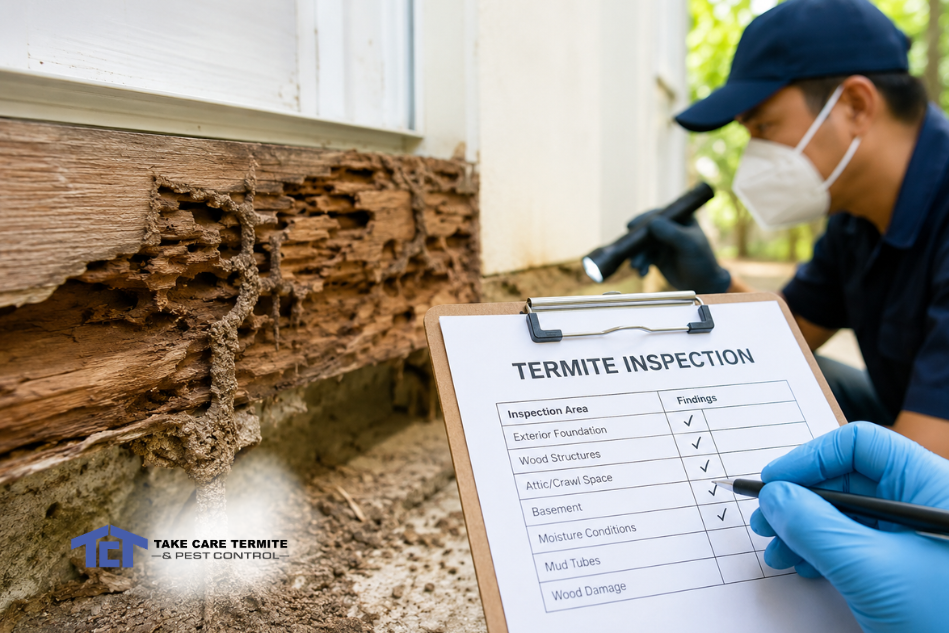
What Happens During a Termite Inspection?
A professional termite inspection typically involves more than simply walking around the house looking for insects.
At Take Care Termite & Pest Control, the inspection process includes reviewing the property with the homeowner, examining accessible interior and exterior areas, checking wood for signs of damage, and looking for conducive conditions.
Depending on the property, inspectors may examine areas such as:
- Exterior walls and foundations
- Window sills and baseboards
- Under sinks
- Attic access areas
- Crawl spaces
- Accessible structural wood
- Areas with moisture or leaks
The findings can then be documented in a report with recommendations for appropriate treatment or repairs.
This gives homeowners and property managers something much more useful than simply knowing that “bugs were found.”
You get information that can help you decide what to do next.
What If the Inspection Finds Termites?
Do not panic.
Finding termite activity does not automatically mean you need to replace your entire home or immediately choose the most aggressive treatment available.
The appropriate response depends on factors such as the termite species, location, extent of activity, and condition of the structure.
Treatment options may include targeted treatments, liquid applications, foam treatments, or fumigation in situations where it is appropriate.
The key is to inspect first and treat based on the findings.
Take Care Termite & Pest Control provides customized termite control solutions based on the type of termite and the extent of the infestation.
Learn more about our Termite Treatment Services and available treatment options.
How Often Should You Get a Termite Inspection?
There is no single inspection schedule that fits every property.
Factors such as location, construction, property history, moisture conditions, previous termite activity, and the type of termite found can all influence risk.
UC IPM notes that regular inspections every three to five years can help detect infestations before they become damaging. Take Care Termite & Pest Control recommends more frequent inspections for properties where ongoing termite risk warrants additional monitoring.
If your property has a history of termite problems, visible warning signs, moisture issues, or other conducive conditions, it may make sense to arrange an inspection sooner.
The important point is not to wait until damage becomes severe.
Frequently Asked Questions About Termite Inspections
Do I need a termite inspection if I don’t see termites?
Yes. Termites often remain hidden inside wood, walls, crawl spaces, or underground. A professional inspection can identify signs of activity or damage that may not be visible during a normal walk-through.
What are the most common signs of termites?
Common warning signs include mud tubes, discarded wings, termite swarmers, termite droppings or pellets, damaged or hollow-sounding wood, and visible structural damage. Moisture problems and wood-to-soil contact can also create conditions that increase termite risk.
Can termites cause serious property damage?
Yes. Termites feed on wood and can damage structural components over time. The longer an infestation remains undetected, the greater the potential for damage and costly repairs.
Are flying ants the same as termite swarmers?
No. Flying ants and termite swarmers are different insects, but they can look similar. Differences in their wings, antennae, and body shape can help with identification. If you are unsure, a professional inspection can provide a more reliable answer.
Is fall a good time for a termite inspection?
Yes. Fall can be a practical time to inspect your property, particularly because some termite species swarm during spring or fall depending on local conditions. An inspection can also help identify damage or conditions that need attention before the property enters the cooler months.
What happens after a termite inspection?
Your inspector should explain the findings and identify areas of concern. Depending on what the inspection reveals, recommendations may include monitoring, correcting moisture or structural conditions, termite treatment, or repairs.
Protect Your Property Before a Small Problem Becomes a Major Repair
Termites rarely make themselves easy to find.
By the time you notice obvious damage, the problem may have been developing for much longer.
That is why recognizing early warning signs—and knowing when to call a professional—can make a significant difference.
Whether you are a homeowner protecting your biggest investment or a property manager responsible for multiple buildings, a professional termite inspection can give you the information you need to act before damage becomes more extensive.
Don’t wait for termites to become an expensive surprise.
Early detection can save thousands in repairs. Schedule your termite inspection with our experienced team today.
Take Care Termite & Pest Control provides professional termite inspections, reports, treatment, and pest-related repair services throughout the Central Valley and Tri-Valley areas of California.
Call Take Care Termite & Pest Control at (209) 832-7300 or request your inspection today.